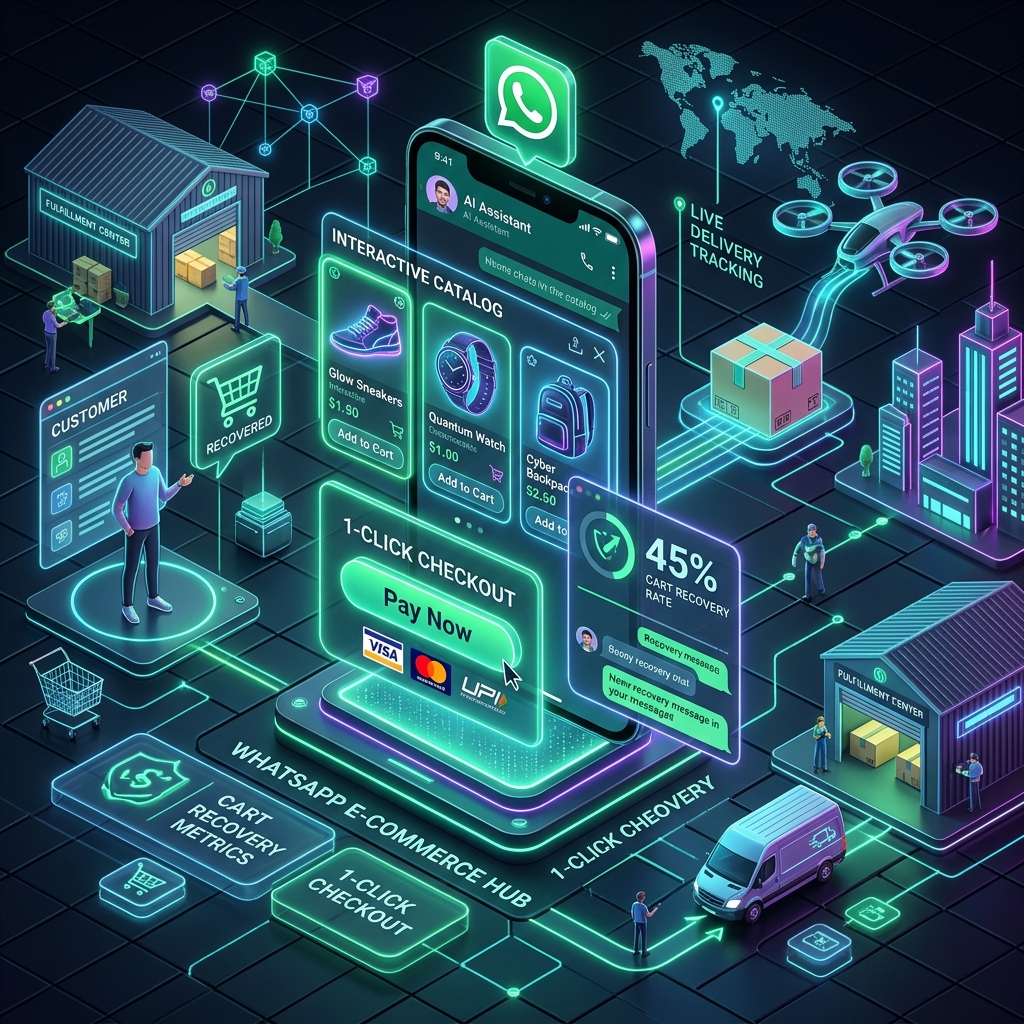
For online retailers, D2C brands, and boutique distributors, shopping cart abandonment is the single biggest revenue drain in modern commerce. Worldwide, nearly 70% of shoppers who add products to their cart leave without completing the purchase.
For a decade, brands relied on automated email sequences to win back lost sales. But in 2026, with customer attention fragmented and inbox filters aggressive, email recovery alone is obsolete. In this comprehensive guide, we examine the mechanics of conversational WhatsApp commerce: building an interactive catalog, integrating 1-click payment links, and deploying automated cart recovery drips that consistently reclaim 35% to 50% of lost orders.
1. The Economics of Abandoned Cart Recovery: Email vs. WhatsApp
Customer acquisition costs on Google Ads and Meta platforms have risen dramatically over the last three years. Winning back shoppers who have already expressed high buying intent is the fastest way to boost store profitability without increasing ad spend.
The table below highlights the stark contrast in customer engagement between legacy email sequences and conversational WhatsApp outreach:
| Channel Metric | Automated Email Recovery | WhatsApp Conversational Recovery |
|---|---|---|
| Average Open Rate | 12% – 16% | 95% – 98% |
| Average Response Time | 6 to 12 hours | Under 90 seconds |
| Click-Through Rate (CTR) | 2% – 4% | 25% – 42% |
| Average Cart Recovery Rate | 5% – 8% | 28% – 45% |
2. Setting Up Your Interactive WhatsApp Product Catalog
Modern WhatsApp commerce goes far beyond plain text descriptions. Using the official Meta WhatsApp Business Cloud API, brands can showcase rich product cards with high-resolution imagery, variant selectors, pricing, and stock availability directly inside the chat window.
Shoppers can browse collections, add multiple items to a native WhatsApp cart, and review their order summary without ever leaving the messaging app.
3. 1-Click Conversational Checkout with Razorpay & Stripe
Friction at checkout is the primary cause of abandoned purchases. Forcing a mobile shopper to register an account, enter a 16-digit credit card number, and verify three passwords causes instant drop-off.
KelBrix generates dynamic payment links embedded directly into the chat flow. In India, buyers complete checkout in two taps via Google Pay, PhonePe, or Paytm UPI. Internationally, buyers pay seamlessly via Apple Pay, Google Wallet, or multi-currency Stripe checkout.
4. The 3-Stage Recovery Automation Playbook
Effective cart recovery balances persistence with respectful engagement. KelBrix enables you to configure smart timing triggers based on customer behavior:
- Touchpoint 1 (30 Minutes Post-Abandonment): Soft assistance check ("Did you run into any trouble with your order? Here is a quick link to your saved cart.")
- Touchpoint 2 (4 Hours Post-Abandonment): Social proof and reassurance ("Loved by over 5,000 customers. Check out reviews from verified buyers.")
- Touchpoint 3 (24 Hours Post-Abandonment): High-urgency incentive ("Your saved cart expires tonight. Use code RECOVER10 for 10% off before stock runs out.")
Frequently Asked Questions
How does WhatsApp abandoned cart recovery differ from traditional email recovery?
Traditional abandoned cart emails suffer from low open rates (12% to 15%) and often land in promotional or spam folders. WhatsApp messages achieve significantly higher read and engagement rates compared to email, often resulting in 3x higher cart recovery conversions.
Can customers make payments directly inside WhatsApp?
Yes. KelBrix integrates with payment gateways like Razorpay and Stripe. Customers receive a secure 1-click checkout link or native payment prompt inside the WhatsApp conversation, supporting credit cards, UPI, net banking, and international currencies.
Does KelBrix integrate with courier and shipping partners like Shiprocket?
Yes. When an order is completed, KelBrix syncs with logistics providers like Shiprocket to automatically dispatch tracking links, dispatch confirmations, and delivery updates directly to the customer via WhatsApp.
What is the optimal timing sequence for WhatsApp cart recovery messages?
The highest-converting sequence is: Message 1 sent 30 minutes after abandonment (helpful reminder with cart link), Message 2 sent 4 hours later (addressing common objections or offering customer support assistance), and Message 3 sent 24 hours later (limited-time discount code or free shipping incentive).
Are there extra transaction fees or conversation markups on sales made via WhatsApp?
No. KelBrix enforces a strict 0% API markup policy. You pay standard payment gateway processing fees (e.g. Razorpay or Stripe) and Meta Cloud API conversation rates at-cost with zero extra middleman transaction fees.
Share this article
Authored by KelBrix Revenue Operations & Editorial Desk
Based in Mumbai, India. Our editorial and revenue engineering teams verify all sales workflows, CRM architectures, WhatsApp API rules, and pricing data directly against production systems.